
Having trouble getting your favorite PlayStation 1 games to run? If your emulator won’t boot, shows a black screen, has missing sound, or crashes during gameplay, the problem is often an incorrect or missing PS1 BIOS file rather than the game itself. Here, you can download tested PS1 BIOS files for ePSXe, DuckStation, and RetroArch, along with a quick setup guide to help you install them correctly. Once the BIOS is in place, you’ll enjoy better compatibility, smoother gameplay, and a hassle-free emulation experience. Download the PS1 BIOS Full Pack below and start playing your favorite PlayStation classics.
Available PS1 BIOS Files by Region – USA, PAL, NTSC, NTSC-J
Each BIOS file is provided in .bin format and is compatible with all major PS1 emulators.
SCPH1001.BIN – (USA)
This is the North American BIOS used for PlayStation games from the USA and Canada.
SCPH7502.BIN – PAL
This is the official European BIOS for PlayStation games released across Europe, the UK, and Australia.
SCPH5500.BIN – Japan
This is the Japanese BIOS made for PlayStation games released in Japan and other parts of Asia.
SCPH7003.BIN – Worldwide
This is a universal BIOS that can run PlayStation games from all regions around the world.
What Is PS1 BIOS and Why Is It Important?
A PS1 BIOS (Basic Input/Output System) is the original firmware built into every Sony PlayStation 1 console. It is the first software that runs when the console powers on, handling essential tasks such as checking the hardware, loading games, managing memory cards, and initializing the system. In simple terms, the BIOS acts as the bridge between the console hardware and your games.
When using a PS1 emulator like ePSXe, DuckStation, or RetroArch, the BIOS performs the same role. It allows the emulator to recreate the behavior of the original PlayStation, resulting in better compatibility, improved stability, and a more authentic gaming experience. Without the correct BIOS file, some games may fail to boot, display black screens, suffer from audio or graphics issues, or experience crashes during gameplay.
Why Do You Need a PS1 BIOS?
Using an original PS1 BIOS offers several advantages:
- Higher game compatibility with thousands of PlayStation 1 titles.
- More accurate emulation that closely matches the original console.
- Reliable game saving through memory card support.
- Correct PlayStation boot screen and system startup sequence.
- Better graphics and audio synchronization with fewer glitches.
- Improved stability and fewer crashes during gameplay.
- Support for different regional BIOS versions (USA, Europe, and Japan).
If you want the best experience on ePSXe, DuckStation, RetroArch, or other PS1 emulators, using the correct BIOS file is highly recommended. It ensures smoother gameplay, better performance, and compatibility with a wider range of PlayStation classics.
PS1 BIOS Versions by Region
PS1 BIOS files are available in different regional versions. Each one is designed for a specific PlayStation console region and works best with games released for that market. While most modern emulators support multiple BIOS files, choosing the correct version improves compatibility, reduces errors, and delivers a more authentic PlayStation experience.
USA (NTSC-U) BIOS
The USA BIOS is the most popular choice for PS1 emulation. It offers excellent compatibility with emulators like ePSXe, DuckStation, and RetroArch, making it the preferred option for most users.
Common BIOS files:
- SCPH1001.BIN
- SCPH5501.BIN
- SCPH7001.BIN
- SCPH7501.BIN
- SCPH101.BIN
Best for:
- North American games
- Stable performance
- First-time emulator setup
Europe (PAL) BIOS
The PAL BIOS is designed for PlayStation consoles sold in Europe and other PAL regions. It is recommended for European game releases that run at the PAL video standard.
Common BIOS files:
- SCPH1002.BIN
- SCPH5502.BIN
- SCPH7002.BIN
- SCPH7502.BIN
- SCPH9002.BIN
- SCPH102A.BIN
- SCPH102B.BIN
Best for:
- European game discs
- PAL-exclusive titles
- Region-specific compatibility
Japan (NTSC-J) BIOS
The Japanese BIOS is intended for PlayStation consoles released in Japan. It provides the best compatibility with Japanese-exclusive games and original NTSC-J releases.
Common BIOS files:
- SCPH1000.BIN
- SCPH3000.BIN
- SCPH3500.BIN
- SCPH5000.BIN
- SCPH5500.BIN
- SCPH7000.BIN
Best for:
- Japanese PlayStation games
- NTSC-J game collections
- Original Japanese console emulation
Which PS1 BIOS Should You Use?
For most users, SCPH1001.BIN is the recommended PS1 BIOS. It is the most widely supported BIOS across popular emulators and provides excellent compatibility with a large number of PlayStation games. If you’re playing games from a specific region, using the matching regional BIOS can further improve compatibility and reduce the chance of boot or performance issues.
| BIOS File | Region | Recommended For |
|---|---|---|
| SCPH1001.BIN | USA (NTSC-U) | Best overall choice for most users |
| SCPH5501.BIN | USA (NTSC-U) | Excellent compatibility |
| SCPH5502.BIN | Europe (PAL) | European game library |
| SCPH5500.BIN | Japan (NTSC-J) | Japanese-exclusive titles |
| SCPH7001/7002/7000.BIN | USA / Europe / Japan | Later console revisions |
Recommendation: If you’re unsure which BIOS to use, start with SCPH1001.BIN. It is the most compatible and reliable option for ePSXe, DuckStation, and RetroArch, making it the best choice for the majority of PS1 games.
Key Features of PS1 BIOS in Emulators
A PS1 BIOS does more than help an emulator start. It recreates the core functions of the original PlayStation, making games run more accurately with better compatibility, smoother performance, and reliable system features.
- Authentic PlayStation Boot Screen: Displays the original PlayStation startup animation and boot sound, giving you the same experience as using a real PS1 console.
- Better Game Compatibility: Improves compatibility with thousands of PlayStation games and reduces common issues such as black screens, crashes, and loading errors.
- Memory Card Support: Enables virtual memory cards so you can save and load game progress just like on the original PlayStation.
- Stable Performance: Provides a more stable emulation experience by allowing the emulator to accurately reproduce the console’s system functions.
- Accurate Audio and Graphics: Keeps sound effects, music, and graphics synchronized while maintaining the correct video standard for your game’s region (NTSC or PAL).
- Region Support: Works with regional PlayStation games by using the appropriate BIOS version for USA (NTSC-U), Europe (PAL), or Japan (NTSC-J).
- Improved Emulator Accuracy: Helps emulators such as ePSXe, DuckStation, and RetroArch behave more like the original PlayStation hardware, resulting in fewer glitches and a more authentic gaming experience.
Where to Download PS1 BIOS Safely
Downloading a PS1 BIOS from a trusted source is important for both security and emulator performance. A clean BIOS file helps prevent installation problems, emulator errors, and corrupted game saves. Before using any BIOS, make sure it matches your emulator and the region of the games you want to play.
Avoid downloading BIOS files from unknown websites, as they may contain modified files, malware, or outdated versions that can cause:
- Emulator crashes and startup errors
- Black screens or game compatibility issues
- Corrupted save files
- Security risks from unsafe downloads
Why Choose Our PS1 BIOS Downloads?
We make it easy to find the right PS1 BIOS for your emulator with files that are organized, tested, and simple to use.
- Verified Files: Every BIOS file is checked before being added to our collection.
- Safe Downloads: Clean files with no unnecessary software or misleading download links.
- Multiple Regions Available: Download BIOS files for USA (NTSC-U), Europe (PAL), and Japan (NTSC-J).
- Works with Popular Emulators: Compatible with ePSXe, DuckStation, RetroArch, and other PS1 emulators.
- Easy Setup Guides: Step-by-step instructions help you install the BIOS correctly, even if you’re new to emulation.
- Regularly Updated: We keep our download resources and setup guides up to date for the latest emulator releases.
Tip: To get the best compatibility, always use a BIOS version that matches your game’s region and your emulator’s requirements.
How to Set Up PS1 BIOS on PC (ePSXe, DuckStation & RetroArch)
Setting up a PS1 BIOS is quick and only takes a few minutes. Follow the steps below to configure the BIOS correctly and start playing PlayStation 1 games without issues.
Step 1: Download the Required Files
Before you begin, make sure you have:
- A PS1 BIOS file (such as SCPH1001.BIN)
- A PS1 emulator (ePSXe, DuckStation, or RetroArch)
- An extraction tool like 7-Zip or WinRAR
Step 2: Extract the Files
If your downloads are compressed, extract them using 7-Zip or WinRAR. Keep the BIOS file in its original .BIN format and save it in a folder that’s easy to find.
Step 3: Install Your Emulator
Install or extract your preferred emulator and launch it once to complete the initial setup.
Set Up BIOS in ePSXe
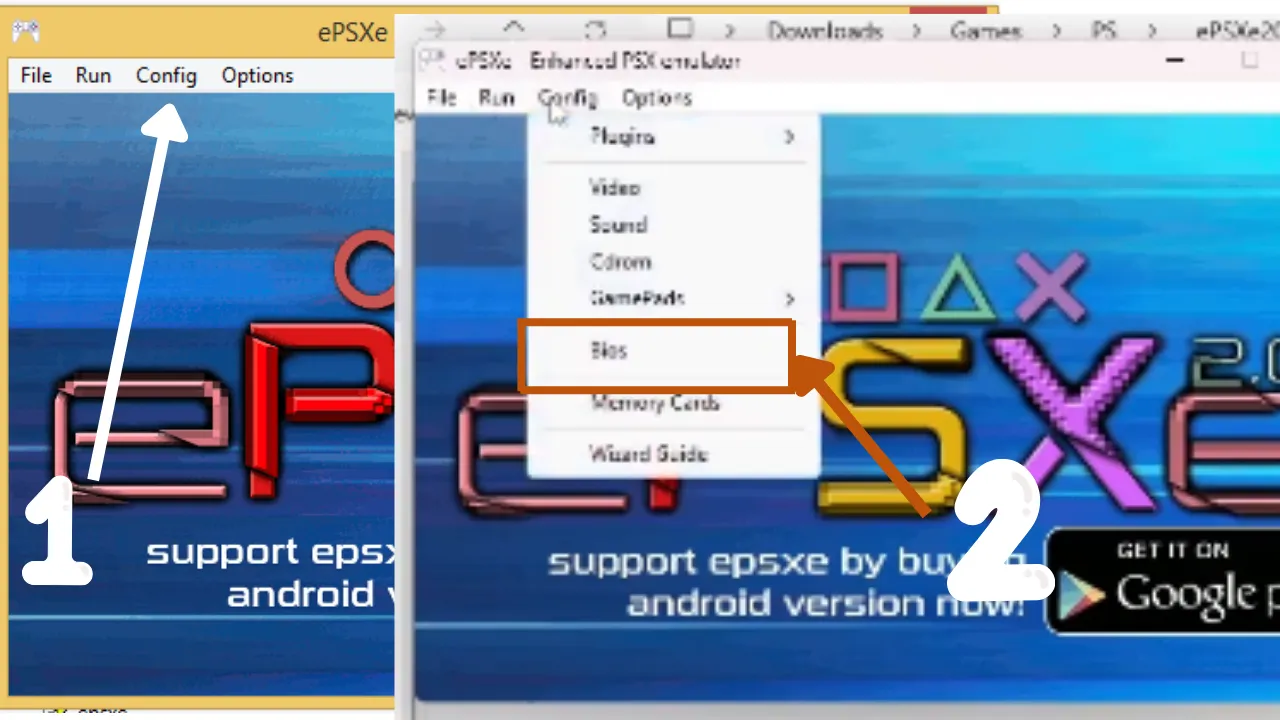
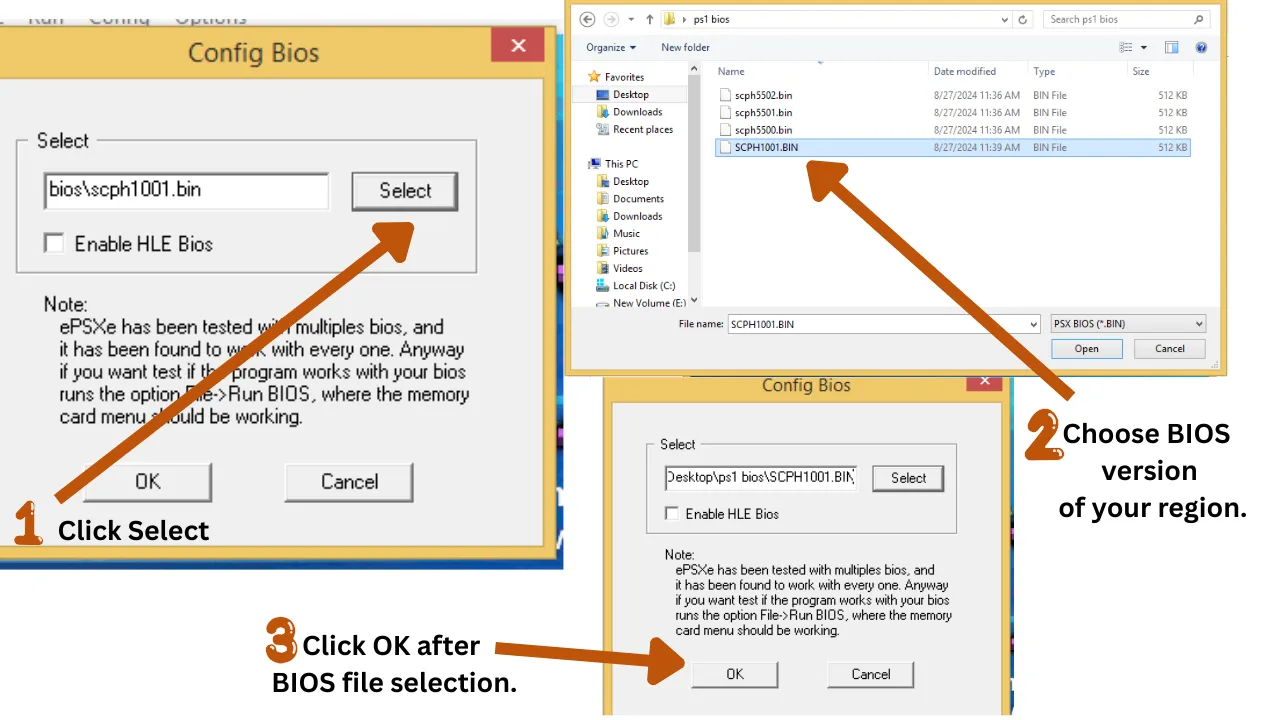
- Open ePSXe.
- Click Config > BIOS.
- Select Browse and locate your PS1 BIOS file.
- Choose the BIOS and click OK or Apply.
- Restart the emulator if required.
Set Up BIOS in DuckStation
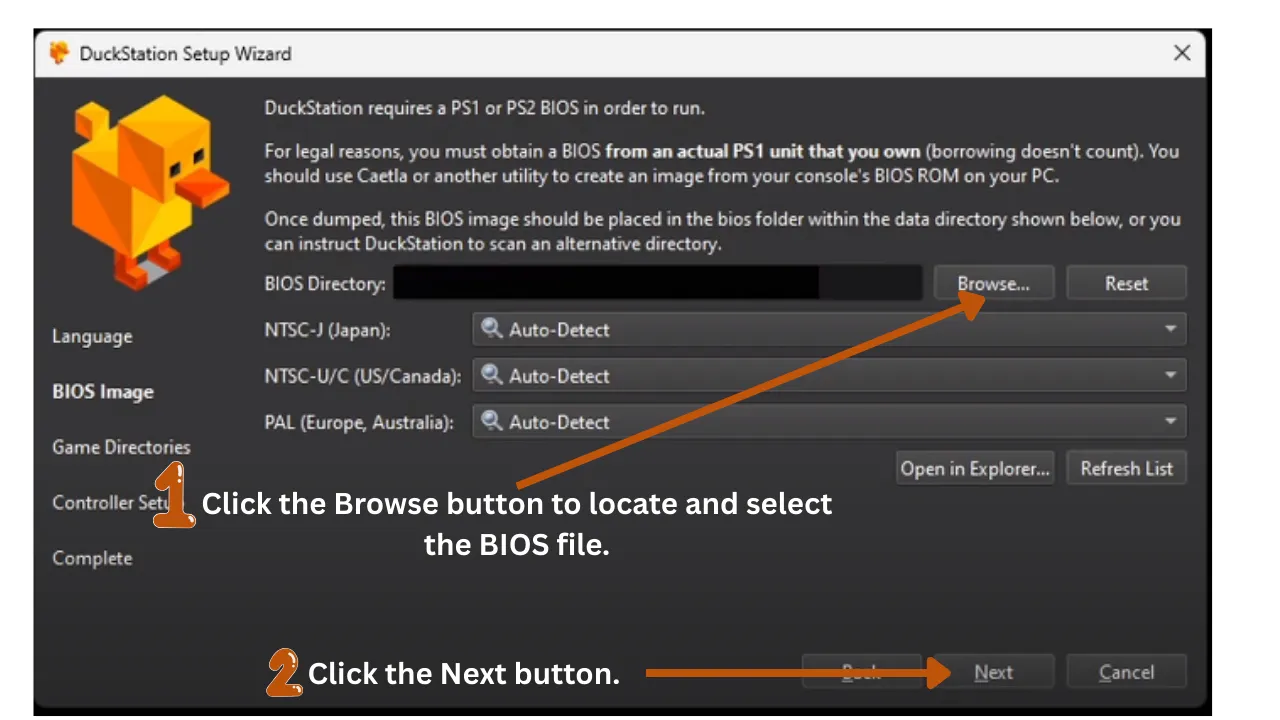
- Launch DuckStation.
- Complete the initial setup wizard.
- When prompted, click Browse.
- Select your PS1 BIOS file.
- Click Next, finish the setup, and start playing.
Want to learn how to set up PS1 BIOS in DuckStation? Open Settings > BIOS, then select the folder containing your BIOS file.
Set Up BIOS in RetroArch
- Copy your BIOS file (such as SCPH1001.BIN) to the System folder inside your RetroArch installation.
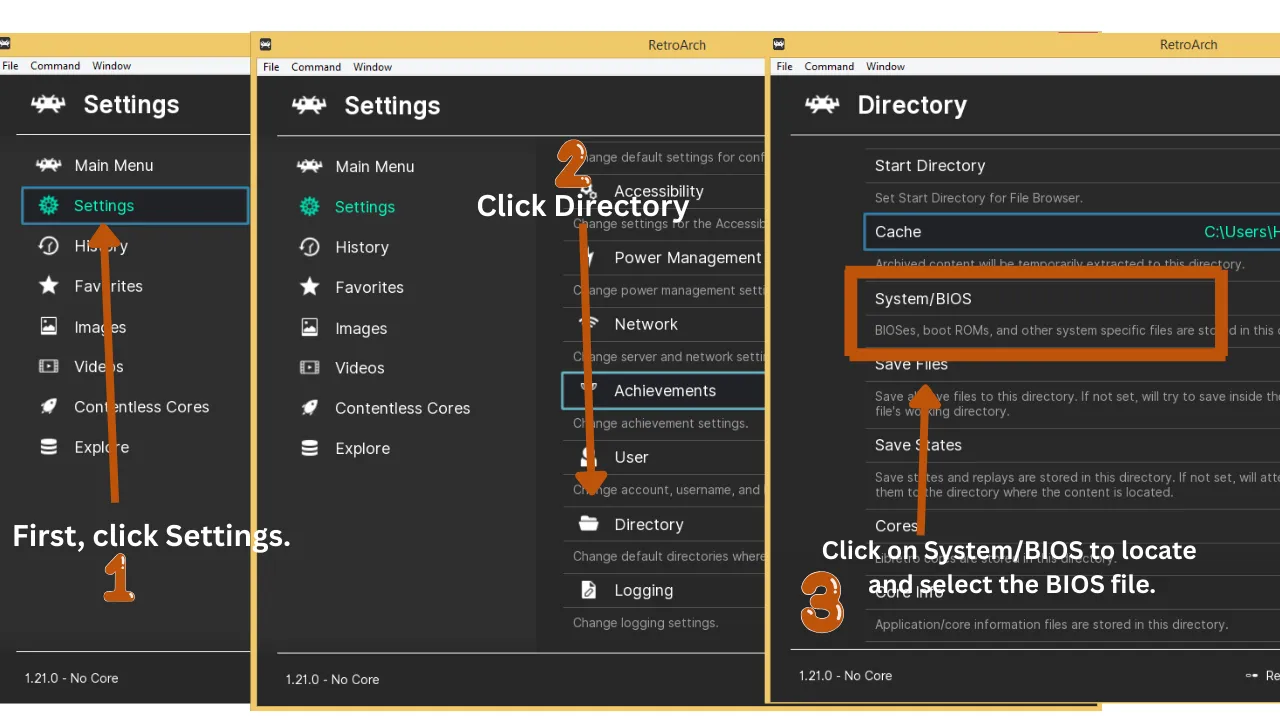
Default BIOS folder locations:
- Windows:
C:\Users\YourName\AppData\Roaming\RetroArch\system - macOS:
~/Library/Application Support/RetroArch/system - Linux:
~/.config/RetroArch/system
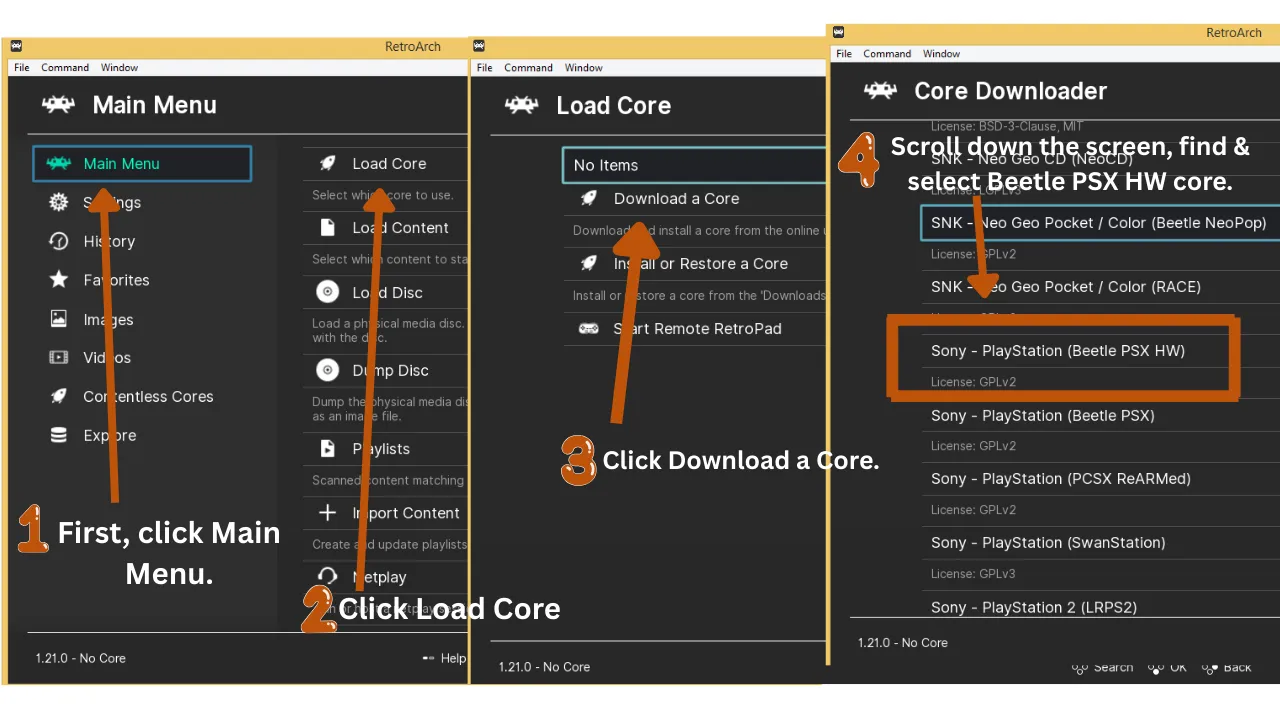
- Open RetroArch.
- Go to Settings > Directory > System/BIOS and verify that the folder path is correct.
- Download and install the Beetle PSX or SwanStation core from Online Updater > Core Downloader.
- Restart RetroArch and load your PS1 game.
Tip: If your emulator doesn’t detect the BIOS, make sure the file is in .BIN format, the filename hasn’t been changed, and it has been placed in the correct BIOS folder.
How to Set Up PS1 BIOS on Android & iPhone
Setting up a PS1 BIOS on your mobile device is simple. Once the BIOS is installed correctly, you can play PlayStation 1 games on emulators like ePSXe, DuckStation, and RetroArch with better compatibility and performance.
Step 1: Download the Required Files
Before you begin, download:
- PS1 BIOS file (such as SCPH1001.BIN)
- A PS1 emulator (ePSXe, DuckStation, or RetroArch)
- Your PS1 game files (.ISO, .BIN, .CUE, etc.)
- ZArchiver (Android only, if your files are compressed)
Step 2: Extract the Files
If the BIOS or game files are in ZIP, RAR, or 7Z format, extract them using ZArchiver or your preferred file manager. Make sure the BIOS remains in .BIN format.
Set Up BIOS in ePSXe (Android)
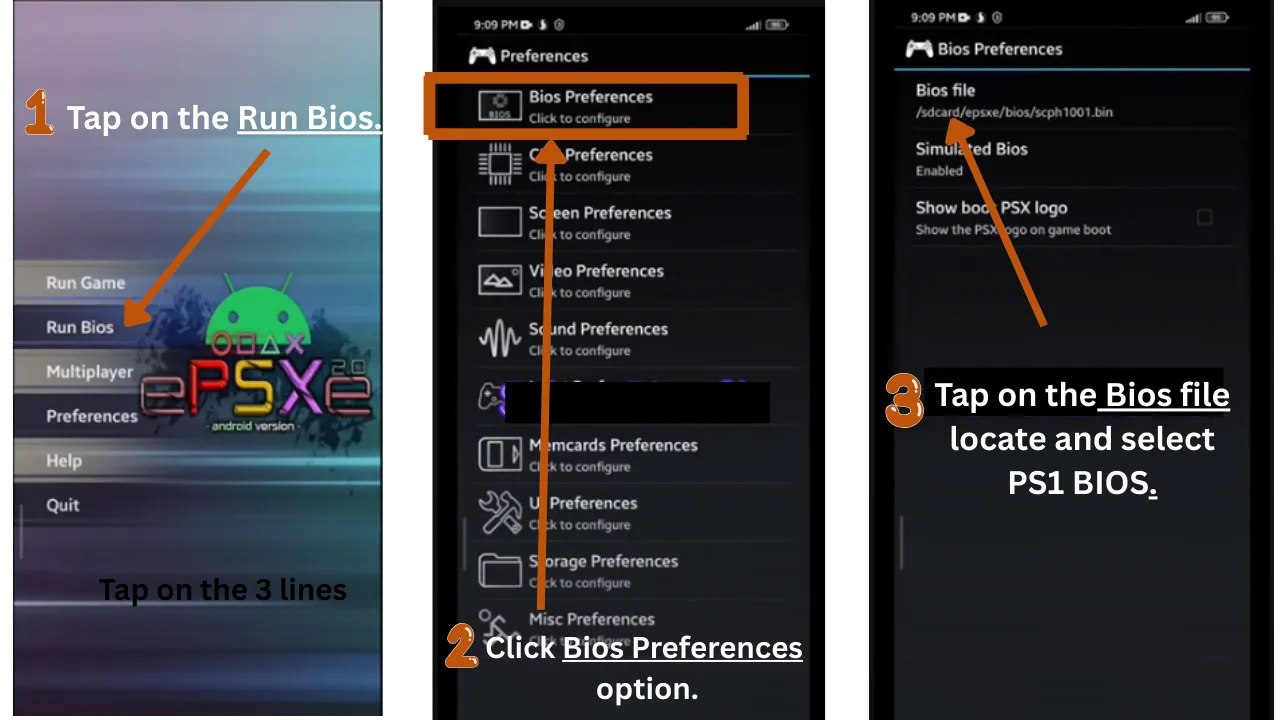
- Install and open ePSXe.
- Tap Run BIOS or open Preferences > BIOS.
- Select BIOS File.
- Browse to your SCPH1001.BIN (or another PS1 BIOS) and select it.
- Save the settings and restart the emulator if needed.
Set Up BIOS in DuckStation (Android)
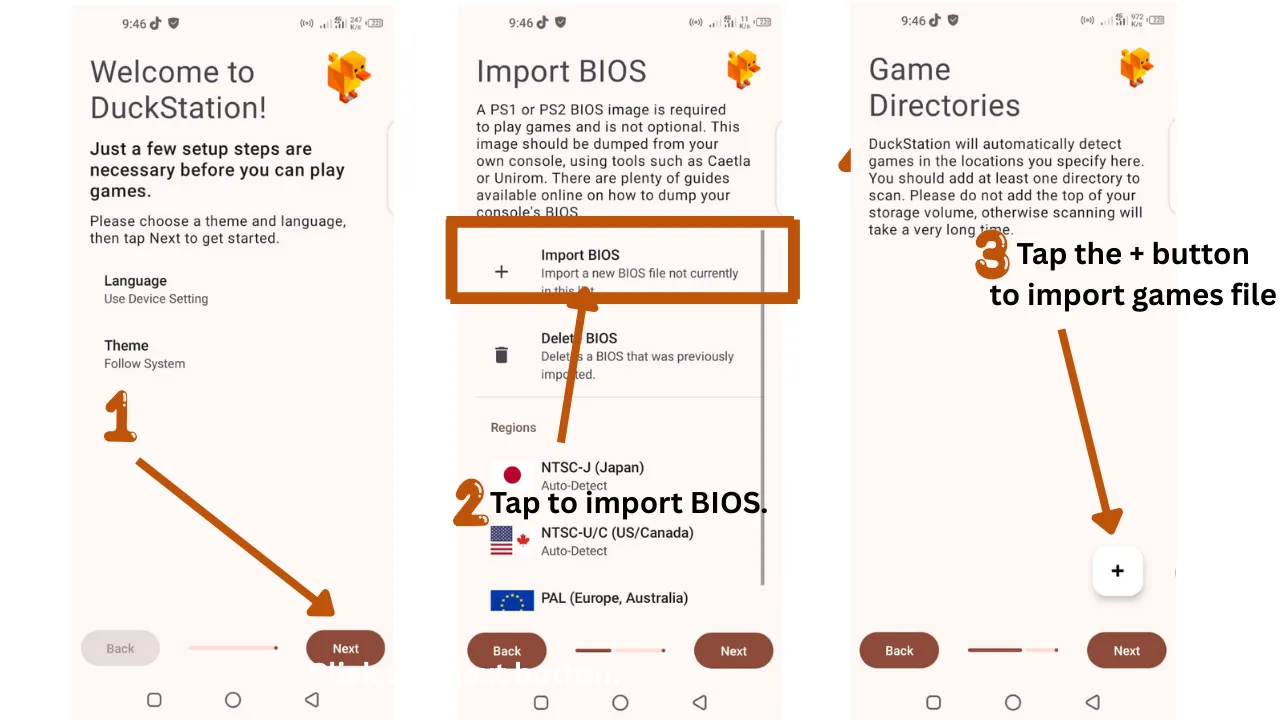
- Install and launch DuckStation.
- Complete the initial setup.
- Tap Import BIOS or the + button.
- Locate and select your PS1 BIOS file.
- Finish the setup and start playing.
If you’ve already completed the setup: Go to Settings > BIOS and import the BIOS manually.
Set Up BIOS in RetroArch (Android & iPhone)
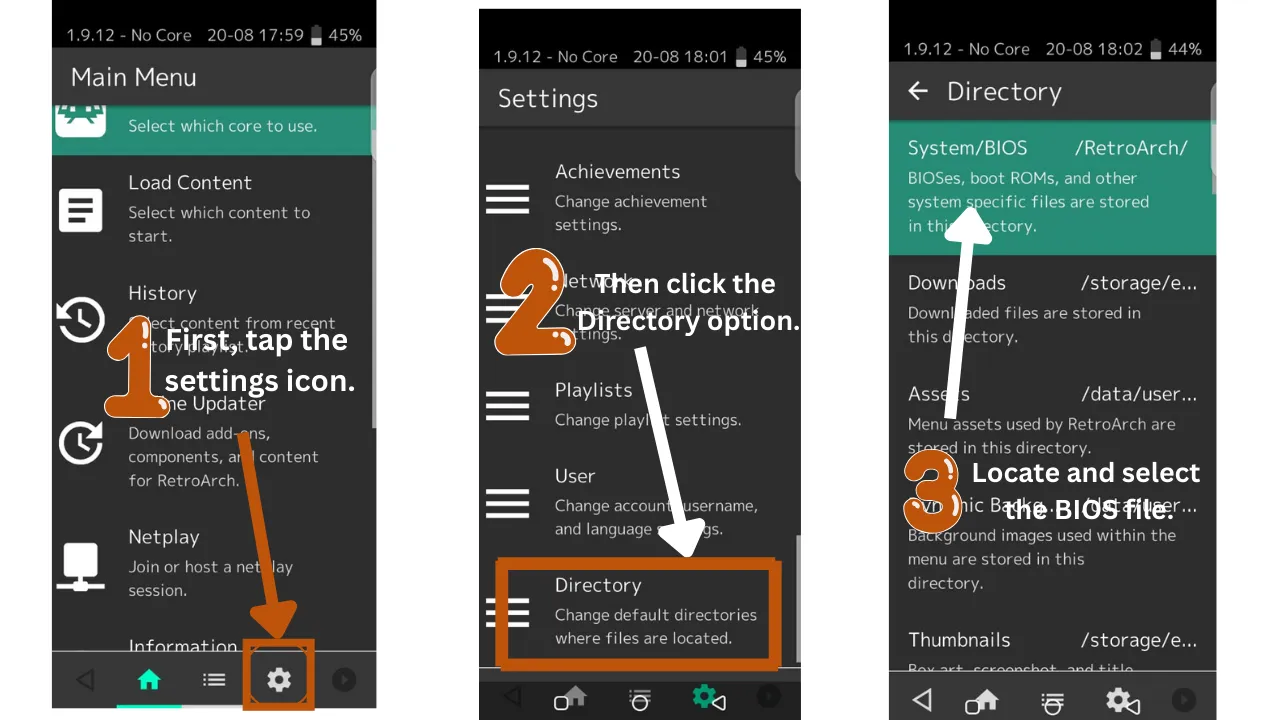
- Copy your BIOS file to the RetroArch/system folder.
Default Android location:/storage/emulated/0/RetroArch/system/
On iPhone (iOS):
Open the Files app and place the BIOS file in the RetroArch/system directory (or the System folder you selected in RetroArch).
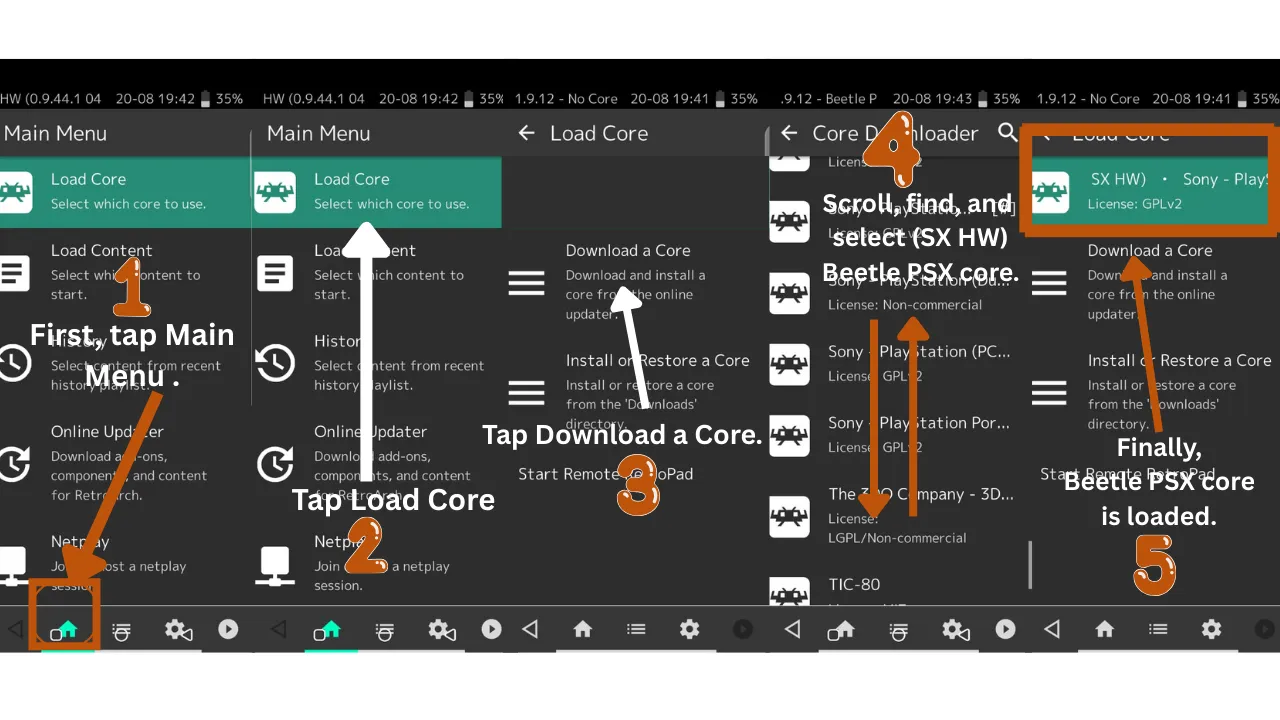
- Open RetroArch.
- Go to Settings > Directory > System/BIOS and make sure it points to the correct folder.
- From the main menu, open Online Updater > Core Downloader.
- Download the Beetle PSX (HW) or SwanStation core.
- Restart RetroArch and load your PS1 game.
Tip: If the emulator cannot find the BIOS, verify that the file is named correctly (for example, SCPH1001.BIN) and is stored in the correct System folder without being compressed.
Supported Emulators for PS1 BIOS
A PS1 BIOS works with several PlayStation emulators, but some offer better compatibility, performance, and features than others. Below are the most popular emulators that fully support PS1 BIOS files.
ePSXe (Windows & Android)
ePSXe is one of the oldest and most trusted PS1 emulators. It delivers excellent game compatibility, reliable performance, memory card support, and customizable graphics and controller settings. It’s a great choice for beginners and long-time PlayStation fans alike.
DuckStation (Windows, Android & Linux)
DuckStation is a modern PlayStation emulator known for its accuracy, fast performance, and user-friendly interface. It supports higher internal resolutions, widescreen enhancements, texture filtering, save states, and fast boot options, making it one of the best PS1 emulators available today.
RetroArch (Windows, Android, iPhone, macOS & Linux)
RetroArch is a multi-system emulator that runs PS1 games through cores such as Beetle PSX, Beetle PSX HW, PCSX ReARMed, and SwanStation. It offers advanced features including shaders, achievements, rewind, netplay, cloud saves, and extensive controller customization, making it ideal for users who want a complete emulation platform.
Which emulator is best?
If you want the easiest setup, choose DuckStation. For maximum customization and multi-console emulation, RetroArch is an excellent option. ePSXe remains a reliable choice for users who prefer a lightweight and proven emulator.
Difference Between PS1 BIOS and PS2 BIOS
Although both BIOS files serve the same basic purpose, PS1 BIOS and PS2 BIOS are designed for different PlayStation consoles and are not interchangeable. Each BIOS works only with emulators made for its respective console.
| Feature | PS1 BIOS | PS2 BIOS |
|---|---|---|
| Console | PlayStation 1 (PS1) | PlayStation 2 (PS2) |
| Purpose | Boots and emulates PS1 games | Boots and emulates PS2 games |
| Compatible Emulators | ePSXe, DuckStation, RetroArch, Mednafen | PCSX2, AetherSX2, Play!, RetroArch (PCSX2 core) |
| Common BIOS Files | SCPH1001.BIN, SCPH5500.BIN, SCPH5502.BIN | SCPH30004R.bin, SCPH39001.bin, SCPH70012.bin |
| Supported Games | PlayStation 1 games | PlayStation 2 games |
| File Size | Usually 512 KB | Usually 3–4 MB |
| Regions Available | USA (NTSC-U), Europe (PAL), Japan (NTSC-J) | USA (NTSC-U), Europe (PAL), Japan (NTSC-J) |
Which BIOS Should You Use?
Choose the BIOS based on the console you want to emulate:
- Use a PS1 BIOS if you’re playing original PlayStation games with ePSXe, DuckStation, or RetroArch.
- Use a PS2 BIOS if you’re emulating PlayStation 2 games with PCSX2, AetherSX2, or Play!.
- Never use a PS1 BIOS with a PS2 emulator or a PS2 BIOS with a PS1 emulator, as they are not compatible.
Quick Answer: A PS1 BIOS is only for PlayStation 1 emulation, while a PS2 BIOS is only for PlayStation 2 emulation. Using the correct BIOS ensures the best compatibility, stable performance, and accurate gameplay.
Common PS1 BIOS Errors and How to Fix Them
If your PS1 emulator isn’t working as expected, the problem is often related to the BIOS file or emulator settings. Here are the most common issues and their solutions.
BIOS Not Detected
Problem: The emulator cannot find or load the BIOS file.
Possible Causes:
- BIOS file is missing.
- File is in the wrong folder.
- Filename has been changed.
- BIOS is still inside a ZIP or RAR archive.
Solution:
- Place the BIOS file in the correct System/BIOS folder.
- Keep the original filename (for example, SCPH1001.BIN).
- Make sure the file is extracted and in .BIN format.
- Restart the emulator after adding the BIOS.
Game Crashes After the Boot Screen
Problem: The game starts but crashes after the PlayStation logo.
Possible Causes:
- Corrupted BIOS file.
- Wrong BIOS region.
- Damaged game image.
Solution:
- Download a clean BIOS file.
- Use a BIOS that matches your game’s region.
- Verify that your game file isn’t corrupted.
Slow Performance or Lag
Problem: Games run slowly or experience frame drops.
Possible Causes:
- High graphics settings.
- Low-end hardware.
- Incorrect renderer.
Solution:
- Lower the internal resolution.
- Try a different graphics renderer (Vulkan, OpenGL, or Direct3D).
- Disable unnecessary graphics enhancements.
- Close background applications to free system resources.
Region Mismatch Error
Problem: The game refuses to boot or displays region-related errors.
Solution:
Use a BIOS that matches your game region:
- SCPH1001.BIN — USA (NTSC-U)
- SCPH5502.BIN — Europe (PAL)
- SCPH5500.BIN — Japan (NTSC-J)
Save Files Are Corrupted
Problem: Game saves fail to load or become corrupted.
Solution:
- Create a new virtual memory card.
- Delete damaged save files.
- Always close the emulator properly before exiting.
Game Freezes During Gameplay
Problem: Games freeze during gameplay or cutscenes.
Possible Causes:
- Incompatible BIOS.
- Incorrect graphics settings.
- Corrupted game file.
Solution:
- Try a different compatible BIOS.
- Update your emulator.
- Adjust graphics settings.
- Verify the integrity of your game image.
Game Image Isn’t Detected
Problem: The emulator cannot find or load your game.
Solution:
- Make sure the game is in a supported format such as ISO, BIN/CUE, or CHD.
- Re-extract the game if it’s compressed.
- Confirm that the file isn’t corrupted.
Graphics Glitches
Problem: Screen tearing, missing textures, or graphical artifacts appear during gameplay.
Solution:
- Enable V-Sync if available.
- Switch to another graphics renderer.
- Update your graphics drivers.
- Restore default graphics settings if needed.
Audio Delay or Distorted Sound
Problem: Audio is delayed, crackles, or falls out of sync.
Solution:
- Enable audio synchronization.
- Reduce audio latency in the emulator settings.
- Make sure the correct video standard (NTSC 60Hz or PAL 50Hz) is being used.
Quick Tip: Most PS1 BIOS issues can be resolved by using a clean BIOS file, matching the BIOS to your game’s region, and keeping your emulator updated to the latest version.
Frequently Asked Questions
What is a PS1 BIOS?
A PS1 BIOS is the original firmware of the Sony PlayStation 1 console. It allows emulators like ePSXe, DuckStation, and RetroArch to accurately recreate the console’s hardware so PS1 games can run properly.
Do all PS1 emulators require a BIOS?
Not all emulators require a BIOS. Some offer High-Level Emulation (HLE), but using an official PS1 BIOS provides better compatibility, fewer bugs, improved audio, and more accurate gameplay.
Can I use the same PS1 BIOS on Windows, Android, and macOS?
Yes. The same BIOS file can be used on different operating systems as long as your emulator supports it and the BIOS is placed in the correct folder.
Which PS1 BIOS file is the most recommended?
SCPH1001.BIN is the most commonly recommended PS1 BIOS because it offers excellent compatibility with popular emulators such as ePSXe, DuckStation, and RetroArch.
What happens if I use a BIOS from a different region?
Some games may fail to boot or experience compatibility issues if the BIOS region doesn’t match the game’s region. For the best results, use a BIOS that matches your game (USA, Europe, or Japan).
Is ePSXe still a good PS1 emulator?
Yes. ePSXe remains a reliable emulator with excellent compatibility and performance. However, many users now prefer DuckStation because of its modern interface and improved accuracy.
Can I use PS1 BIOS without an internet connection?
Yes. Once the BIOS is installed and configured, you can play games offline without an internet connection.
Does RetroArch require a PS1 BIOS?
RetroArch can run some games without a BIOS, but using a real PS1 BIOS with the Beetle PSX or SwanStation core provides much better compatibility and accuracy.
Why isn’t my emulator detecting the BIOS?
This usually happens because the BIOS file is in the wrong folder, has been renamed, is still compressed, or isn’t in .BIN format. Verify the file location and filename before launching the emulator.
Can one BIOS file run every PS1 game?
A BIOS like SCPH1001.BIN works with most games, but certain regional titles perform better when using the matching regional BIOS.
Does the BIOS improve game performance?
The BIOS itself doesn’t increase FPS, but it improves compatibility, stability, and system accuracy, which can reduce crashes and gameplay issues.
Why do PS1 BIOS files have different names?
Different BIOS filenames represent different PlayStation hardware revisions and regions. Examples include SCPH1001.BIN (USA), SCPH5502.BIN (Europe), and SCPH5500.BIN (Japan).
Can I use one BIOS file for multiple emulators?
Yes. A single PS1 BIOS file can be used with multiple compatible emulators, including ePSXe, DuckStation, RetroArch, Mednafen, and BizHawk.
Is DuckStation better than ePSXe?
DuckStation is generally considered the better choice because it offers higher accuracy, enhanced graphics, widescreen support, and an easier setup process. ePSXe is still a solid option for users who prefer a lightweight emulator.